

FYI-9: Sisters are doing it for themselves…
Over the years, women have started getting better roles and more appreciation. But the characters are still likely wronged but righteous, damaged but dangerous. Does the modern day damsel have to be a victim before she can be a victor or be crazy before she can be cared for..?
There’s been a flurry of killer roles for women on screen… literally. It now seems you can barely flip a channel without experiencing a film or series where a female figure is proving she is deadlier than the male. That’s good news in many ways and a long time coming. But the catch is whether such shows are actually about female empowerment or just an excuse to simultaneously flex the idea that beautiful and crazy or damaged and dangerous are interchangeable and a catnip cocktail around which to shake and stir provocative drama.
It’s been a gradual, hard-fought-for change. There’s no denying that as far back as the 1980s/1990s, there was starting to be a notable mainstream shift with traditional roles being subverted and challenged, albeit slowly. Television, still male-dominated, began to bring us watershed shows like Cagney and Lacey, a cop-show featuring on a female partnership that navigated problems professional and personal beyond the stereotypes that had once been the purview of male-led shows, but kept their audience.
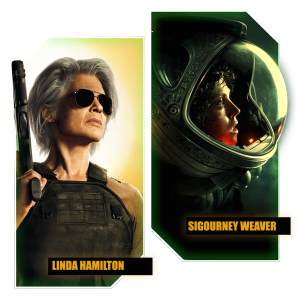 On the big-screen both Sigourney Weaver’s Ellen Ripley and Linda Hamilton’s Sarah Connor did more than just create memorable franchises – they proved that there was absolutely no reason that productions built around a female lead couldn’t be creatively and financially viable. It’s no coincidence that both characters had a strong maternal instinct and that their narratives were driven by a protect-at-all-costs mandate. Ripley’s determination to save surrogate ‘daughter’ Newt in Aliens (ironically rendered moot by Alien 3) is the beating heart of a top-tier action movie and Sarah Connor (in all her forms) is most-often anchored by her sometime dangerous obsession about protecting John Connor and his legacy/destiny no matter the collateral damage to herself or others. It costs them both physically and mentally (in T2, Sarah has to be ‘rescued’ from a psychiatric facility and thereafter in various further sequels she’s dead, an outlier survivalist prepper or an ex-queen of Westeros) and there are no truly happy endings for either heroine. James Cameron helmed both Aliens and Terminator/T2 and though he’s got a reputation as a hard taskmaster and ‘alpha male’ personality in real life, there’s no doubt that many of his movies don’t shy away from strong female characters in general. Another A-list director, Ridley Scott, brought us 1991’s Thelma and Louise (Geena Davis and Susan Sarandon) as two women on the run from their unfulfilling lives and, ultimately, the law. The finale – as the women find themselves caught between Harvey Keitel and the Grand Canyon – is a classic, but once again it’s a production that gives empowerment with one hand and then demands conditional sacrifices and suffering as the price.
And therein lies a problematic trend. It’s fine to make a woman the centre of your saga, but sometimes there seems to be an imbalance in what it takes to make them a hero and what they have to endure in the process. It’s true that male counterparts have been getting brutalised for decades, but – and this might be innately sexist to point out – there’s often something different, something almost gleeful and even sadistic when it comes to what may be inflicted on women. Equally, there’s also been a trend to have that torture be sexual, psychological or both, even beyond the mere ‘last girl’ survival ratios of many a slasher flick.
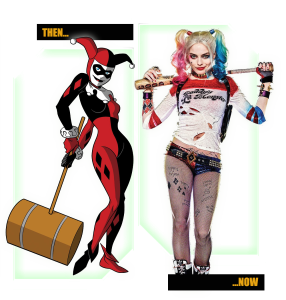 Some productions have something of what I like to call the ‘Harley Quinn‘ problem. The more modern version of that DC character is a far more sexualised character than the more cartoonish version of old – both with Margot Robbie’s screen interpretation and in the recent comics themselves. Doctor Harley Quinlan was supposedly a respected psychiatrist who tried to cure the Joker but fell under his spell. It’s clear (especially in the Jared Leto version) that the Joker abused her and where she once looked like she’d skipped out of Hallowe’en costume store like a cheeky imp, complete with playing card motif and Wylie E. Coyote sledgehammer, now she’s just as lethal as the Clown Prince of Crime and is and prone to dressing like a cheerleader on crack. It very much plays into the kink and caricature combination, suggesting it’s that wild, impulsive untamed side that makes her attractive – to both men and women. There’s plenty of scope for a more mature-themed character that’s both light and dark in execution, but while ‘whatever floats your boat‘ is an option and form-fitting superhero costumes are hardly rare, that specific abusive origin and broken aspect is only sometimes glimpsed for the horrendous crime it should be. Harley Quinn may be celebrated by women and girls as an extreme, wacky action anti-hero (and Robbie expertly captured the mania involved) but the ‘why are the beautiful ones always the craziest?‘ maxim feels more like playing into a the masculine fantasy that embraces the wild side, conveniently filtering out the original abuse and damage beyond the banter. You get to laugh at the cartoon violence she endures and inflicts, but is it as funny when it’s ‘real’?
The days of white-hatted, square-jawed heroes who can do no wrong is long over and was never realistic in and of itself. The modern hero – male or female – usually has to have a flaw and more nuanced drama would likely be lost without such… but it’s the women who seem to be getting the spotlight in that regard, sometimes as the pursuer, sometimes as the pursued. Psychology is everything.
Killing Eve, adapted from the Villanelle novel series by Luke Jennings, was a major international hit, running for four seasons. Jodie Comer – a ridiculously talented actor with a range of accents and physicality that changes form project to project – is delightfully serpentine as acerbic hit-woman Villanelle, a character that is never less than deadly but who is self-aware enough to have a sense of humour about herself and her skills. Killing Eve leaned into that aspect able to produce surprises and shocks but also keep audiences entertained with banter to match the ballistics. Sandra Oh, strong as Eve Polastri makes an interesting counterpoint – outwardly far less confident and apparently shambolic but righteous in her cause, she finds new purpose and determination in catching Villanelle. It’s that balance – with both character, broken in different ways, reluctantly picking up traits from the other – that plays into the drama and ying/yang of it all. Later seasons were problematic on a narrative level, but the two characters’ cat-and-mouse powerplays, the drama, the humour and the actors’ sheer chemistry made Killing Eve cat nip television for several years.
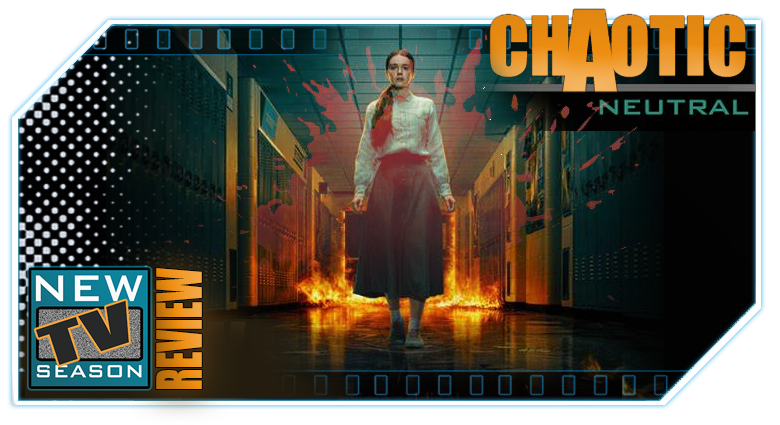
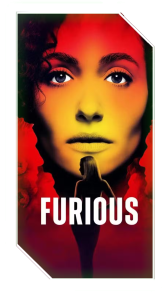 Furious, currently showing on hulu, bears many of the same touchstones – though any laughs are far more sardonic. Again, there’s two strong female leads: one a person working in a fairly lowly position of law enforcement who recognises the potential hallmarks of a serial-killer counterpart and in which they subsequently circle each other yet also come to acknowledge what damaged them both. However, Furious‘ roots actually go back further, drawing its main inspiration from the 1987 film Black Widow (which starred Debra Winger and Theresa Russell) concerning a woman who has a nasty habit of marital murder.
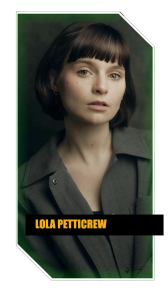 Here, the mix is more complex and brought up to date in a timely manner. Catherine (Lola Petticrew), the killer in question, is a young woman who was trafficked as a young girl and abused by powerful men. Now she’s going through the list of powerful people who hurt her and killing them – first re-entering their lives, disguised in a seductive way and then, once their confidence has been gained, delivering a fatal overdose of fentanyl. Catherine covers her tracks well, but Alice Black, a woman who left an up-and-coming role in the police force after being abused by her long-time boyfriend (who was also a fellow cop) to start again in the lower rungs of the FBI, spots a connection between several recent deaths and realises that there’s a pattern.
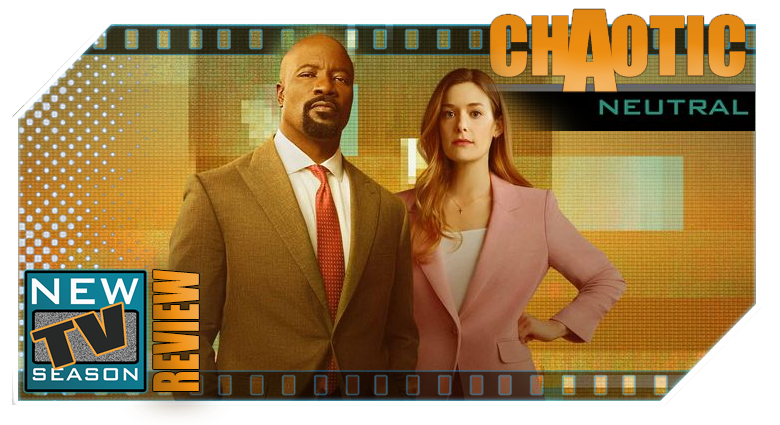
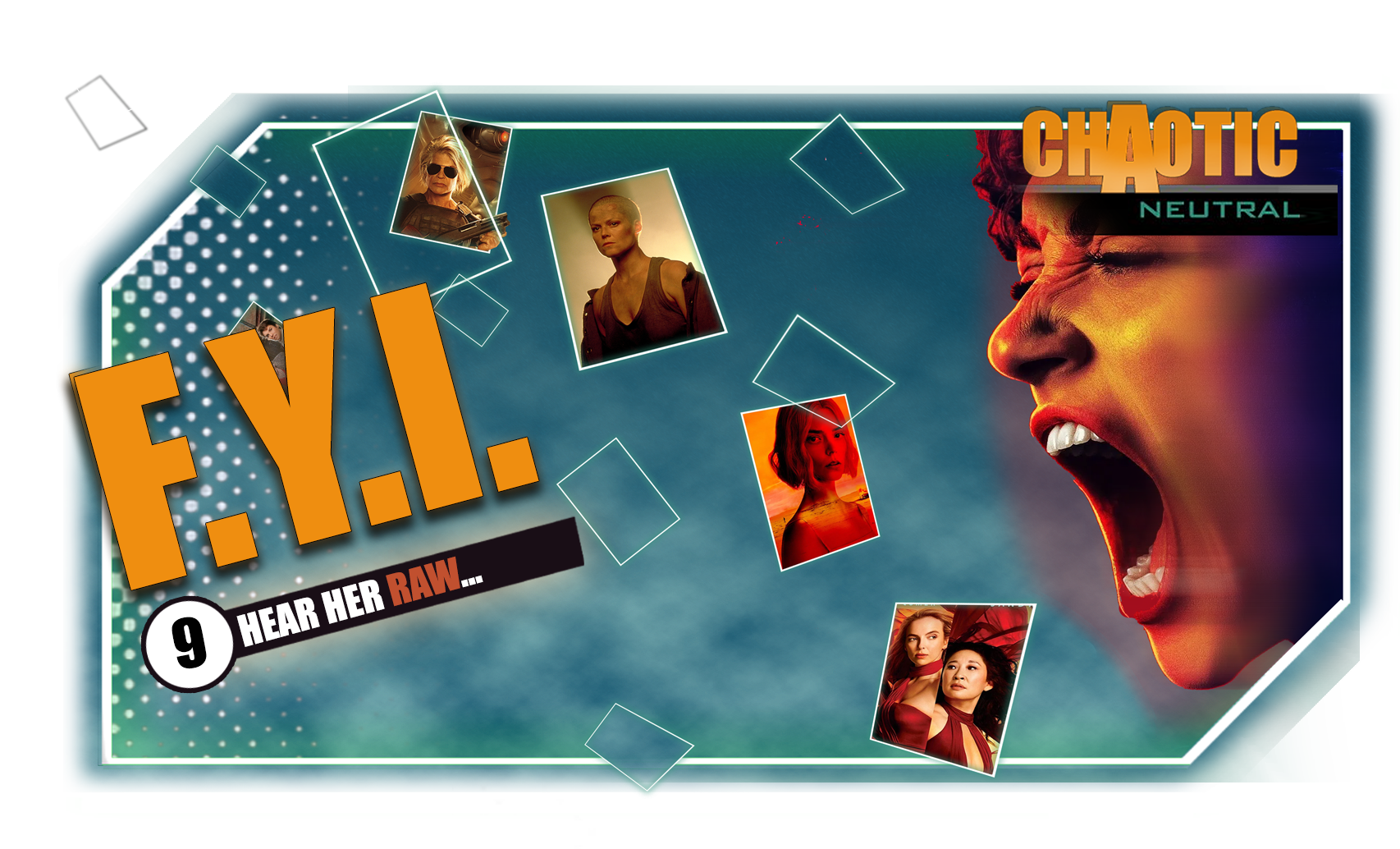
Emmy Rossum (pictured above and shouting out in the cover-art at the top) is a talented bravura performer who has proven herself with both mainstream and more edgy, defiant and risque roles. Her diverse projects have included the likes of Mystic River (2003) in which she played Sean Penn”s ill-fated daughter, The Day After Tomorrow (2004), The Phantom of the Opera (2004), Poseidon (2006) and Dragonball: Evolution (2009), though it’s likely her role as the turbulent Fiona Gallagher in the television series Shameless (2011–2019) – the US adaptation of the UK drama – which gained her awards and acclaim. It would be easy to see her playing the role of the pursued killer in Furious, but instead she’s the pursuer, but one with hefty baggage. PTSD, self-abuse and fault-lines to make her ‘interesting’.
Lola Petticrew gives us a confident performance as Catherine (to use but one of her monikers), a girl who has been abused and damaged in her early life and is now looking for active, unapologetic resolution. She’s an ingenue with ice in her veins. As is the series’ point, it’s possible to see Catherine as simultaneously both a victim and a predator, being sympathetic to her trauma in one scene but still getting a shiver from the obvious sociopathy that drives her actions. Her victims appear to deserve retribution for their past misdeeds and crimes but Catherine’s actions are not meant to be openly celebrated. In that regard the series’ awkward stance on consequence also reminds me less of Killing Eve and more of Promising Young Woman (the 2020 film directed by Emerald Fennell and starring Carey Mulligan as a young woman who pretends to be intoxicated to entrap men and then punishes them for their transgressions).
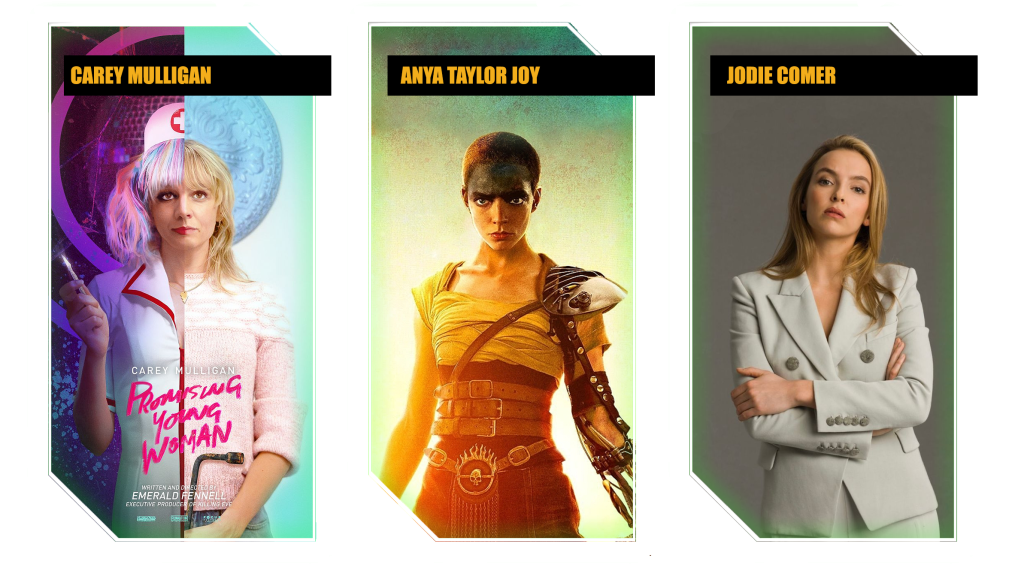 Series such as Lucky (based on the novel by Marissa Stapley) stars Anya Taylor Joy (The Queen’s Gambit, The Witch etc.) as the daughter of a professional criminal who is enticed by her beau (also the progeny of a female mafia-mogul) to steal millions of dollars and make a quick escape together. Then… he makes that escape without her and leaves her alone in their Vegas hotel room with everyone looking for her and the missing cash. Lucky has to think fast on her feet but it doesn’t stop a series of bruises and injuries from interested parties who have their agenda but no time for gender. Getting beaten up and abused might be the harder-edge of screen equality, but it’s not always easy to watch – and shouldn’t be if the drama is doing its job well. Of course, in addition to the projects mentioned above, Joy also brought a young Furiosa to life – in the prequel film to the Mad Max film that had featured Charlize Theron (another star actress never fearing the physical and mental job of bringing flawed but empowered characters to life) as the grown version of Furiosa opposite Tom Hardy.
There’s certainly no reason a female character shouldn’t be as complex or risky as a male counterpart and some of drama’s best roles have leaned into those traits of having personal issues. But there does seem to be a trend towards physical and psychological damage being necessary to make a female character work. Trauma seems to be more inherent – and while it can be handled well and even with dark humour, it’s too often treated as a randomly generated quirk to put the raw into roar. A male series lead can be brusque, haunted, have self-doubt, could be having to use a cane, a wheelchair or just being a gosh-darn maverick… but make your lead a woman and it’s too often some sort of past abuse.
Listen, I like strong, dynamic women on screen – from doctors, detectives through to superheroes – and seeing how and why they became strong can be the backbone of a good result, but I’d just like to see more of a mix out there… more female lead roles that break the mold without being personally broken and who don’t have to have been through abject hell to be heroes… and who are sexy mainly because they’re smart. (Example: while High Potential is generally a quite light police-show, the ABC procedural is a breath of fresh air with a female lead – Kaitlin Olson as intuitive Morgan Gillory – who has issues and foibles, but isn’t crippled and hobbled by them as part of the plot).
Failures and stumbles on the path to redemption can make up any good story and actors (and audiences) want there to be tension and thrills… but they are just some elements of some journeys and in the end we may want more milestones than millstones.
Furious is on hulu, with new episodes every Monday
Lucky is on Apple TV with new episodes every Wednesday