

FYI-6: How we’re preparing to meet our doom…
 We’re doomed! John Mosby looks at the way we’ve envisioned the end of our world and what lies in the aftermath… and why a good apocalyptic catastrophe is catnip for the entertainment industry…
The ‘End‘ being nigh is nothing new. Just as H G Wells wrote of our planet being watched ‘with envious eyes‘ by our Martian neighbours, every generation has looked to the future with a fearful feeling or over its shoulder for something that could be closer than it appears and when we entered the 21st century there was an introspective feeling that the future was either rocket-ships or rubble. In fiction – which, at its best, tends to reflect at least some aspects of current reality – it has proven a rich seam to mine.
Nowadays, the multiplex screens and tv schedules are looking more like the Book of Revelations, plenty of people with furrowed brows are fighting off impending doom, though with the multitude of chaos, no-one seems to agree on what form the most successful apocalypse will take. Even the real-life news reports offer little solace. One minute it’s concerns over AI, then it’s war over oil, land or ego. That’s not to mention deadly viruses rearing their heads and the return of illnesses that really shouldn’t have made a comeback… and let’s not even get started on the weather… The ‘End‘ is fertile ground – if that’s not somehow another contradiction in terms.
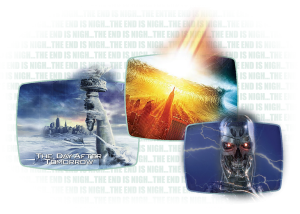
Hollywood loves a good disaster (as long as it’s not financial) and as VFX became better the process evolved from destroying mere buildings, airplanes and ships into full-on potential extinction events. Aliens have often arrived to educate or conquer and they marred festivities with a more violent close encounter in 1996’s Independence Day. Like waiting for buses we suddenly had two asteroids heading our way in 1998 with Armageddon and Deep Impact, The Day After Tomorrow (2004) put us all on ice and, of course, sentient AI discovered time-travel in the Terminator franchise, (offering repeated, sometimes diminishing returns since the 1980s).
All stories of adversity need the obstacle or threat which must be overcome and the dynamics by which that is achieved. Almost all the stories have used the dramatic backdrop to frame the foreground drama, but whether it be all-out science-fiction or a more subtle contemporary story with a prophetic twist, the secret to success is often letting the VFX be the decoration and hook, but making the real story be the relatable relationships and the basic human condition.
Stories featuring people who face isolation or fear of what lies beyond the ‘safety’ of their future home are numerous. In recent years we’ve had the likes of Snowpiercer (a train representing the last of humanity and all its culture-clash potential). It was first a French graphic novel by Jean-Marc Rochette , then an eclectic feature film directed by Bong Joon Ho – starring a cast that included Chris Evans, John Hurt, Tilda Swinton, Ed Harris and Song Kang-ho – and more recently an acclaimed emmy-winning tv series that ran for four seasons with Daveed Diggs, Jennifer Connelly, Sean Bean, Rowan Blanchard and Lena Hall).
Rebecca Ferguson has starred in SILO, a vertical version of a not dissimilar concept based on Hugh Howey’s trilogy of books that highlight a post-apocalyptic civilisation living in city-like silos who begin to question the hidden events that changed our modern world into a far more dystopian, even Orwellian existence. Both shows ask questions about what’s ‘best’ for humanity and how a society that has survived the apocalypse might yet find itself falling back into old patterns and power-plays.
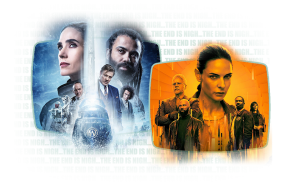 A utopian world without problems hardly makes good drama so there’s always some element of trouble in Paradise. In the case of hulu‘s twisty, water-cooler show of the same name, that was literal with the bunker in this case having a far more pedestrian veneer, even if it was rotten beneath. The show started off as a whodunnit, turned into a wheredunnit and then became a whydunnit as it evolved from a political murder mystery, to a story of powerplays in a confined space away from a world broken by an environmental disaster, to venturing out from behind the (literal) white-picket fences into that wider world and then to… well, the jury is out as the series tends to completely reinvent itself on a regular basis. (A third and final season is due next year).
If Terminators weren’t enough Jonathan Nolan and Lisa Joy gave us a very deep-dive on the Westworld idea – first written and directed by Michael Crichton back in 1973. The idea of life-like theme-park robots going wild was expanded by Nolan and Joy into a far more layered interpretation for the HBO series that ran from 2016-2022 and explored what happened when the robots actually took over the entire world and created their own society. It might have been too psychological and metaphorical (and an assortment of other ‘cals) for some, but sadly HBO pulled the plug on the very expensive and oft-delayed show after four seasons and the proposed final run never happened.
Though the above were undead-free, pesky zombies / infected / circulatory-challenged often seem to run amok when the world goes to heck…
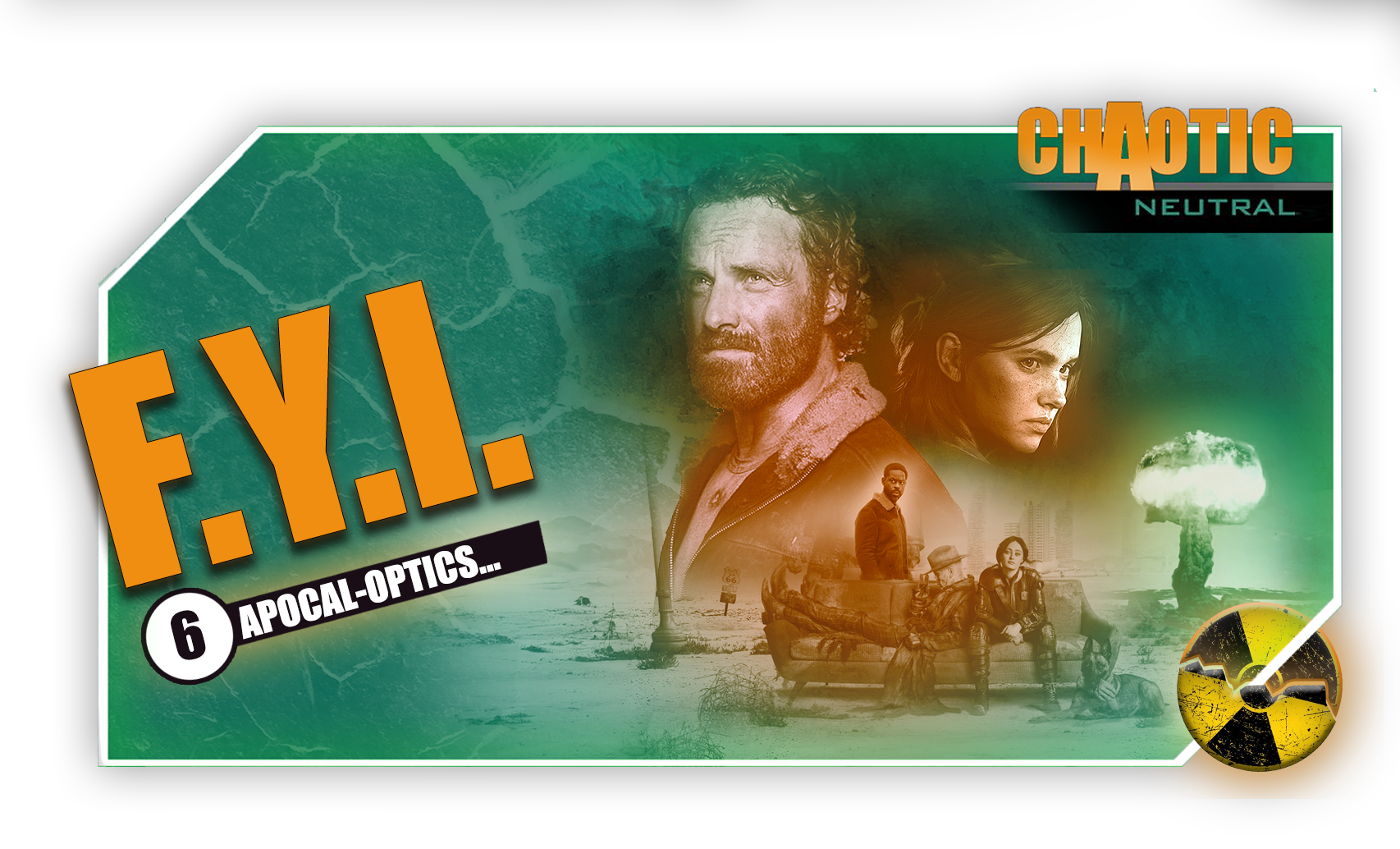
For a long time, The Walking Dead was at the forefront, TWD being the MVP in the post-apocalypse league. Based on the Image comic created by Robert Kirkman, Charlie Adlard and Tony Moore (which ran from 2002-2019), AMC‘s adaptation lasted eleven seasons between 2010 and 2022, telling the story of a world overrun by the undead and how society tried to hold together despite the threats from without and within. Kirkman’s assertion (in both formats) was that the survivors were technically the ‘walking dead’ of the title, trying to find a way for civilization to reassert itself. Though the show differed slightly from the source material (especially as to who lived and died as time went on) it was well-received. The general opinion was that the show began to lose momentum in the latter half of its run – after several regulars including Andrew Lincoln (as Rick Grimes) left – and that the end of the main show was probably past its prime (but still delivering decent ratings). Its inevitable spin-offs have been a mixed bag. Fear the Walking Dead initially went back to the days of the original outbreak but eventually found ways to bring its timeline closer to the main show and even inherited some classic characters. TWD: World Beyond felt marketed to a younger audience but actually expanded several background players who would become more significant later. Nemesis turned anti-hero Negan (Dean Morgan) teamed up with adversary Maggie (Lauren Cohan) for a Manhattan-based Dead City, (currently ongoing), The Ones Who Live revived Rick Grimes and reunited him with , Danai Gurira ‘s Michonne – even if, by then, the demand for their return (initially promised to be a film rather than a mini-series) had slightly faded. Daryl Dixon (with Norman Reedus reprising his TWD role and eventually joined by Melissa McBride’s Carol) took the idea to an international stage, filming first in France and then in Spain, finding cultural touchstones to differentiate it from the mothership. It still has one more season to go before wrapping up its particular story.
On the big-screen, perhaps the most impressive ‘zombie’ movie – certainly the most ambitious – was 2013’s World War Z. an adaptation of Max Brooks’ novel. Starring Brad Pitt, it imagined a high-octane global epidemic with some key scenes of zombie hordes that still impress. A long-gestating sequel now seems to be back on the cards.
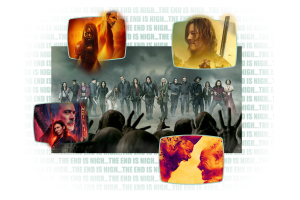
In the computer/console game corner there are a few significant contenders. The Last of Us (Parts 1 and 2) are generally considered the yardstick by which to judge other genre offerings and it was little surprise when it was optioned and developed by HBO. In addition to cutting-edge graphics, there was obviously a lot of research put into the core idea of survivors in a world that had been toppled by an aggressive fungus that lived to spread as fast and viciously as possible. (The Cordyceps virus – which makes the jump to humans in the game is actually a real thing – though it’s failed to bridge that species gap because of incompatible conditions in the human body, though if you do your own due diligence, it’s quite a terrifying thing when observed in the insectoid community!) At its core is, once more, human relationships… the story of a grizzled smuggler named Joel (voiced by Troy Baker) finding new purpose after the death of his family when he has to transport a girl (Ellie – voiced by Ashley Johnson) who may be uniquely immune to the aggressive fungus and ‘infected’ that had so quickly destroyed the world and therefore of value to a lot of people. In the HBO series, the roles are taken by Pedro Pascal and Bella Ramsey respectively. The show was a storming success in its first year but proved controversial in its second after following the similarly divisive story-points of the original game. (Some also felt that Ramsey wasn’t the obvious choice for Ellie – citing the remarkable visually-similar and capable Cailee Spaeny as an alternative, but Ramsey definitely has the acting chops to defy the naysayers).
 There are various other games within the apocalyptic genre. The more flamboyant Fallout also gets the tv treatment with Amazon Prime‘s adaptation (the second season dvd/blu-ray is out next week), though the tone is vivid and colourful rather than the morose shades of other stories. It’s a show that takes certain aspects of its remit seriously, but has the confidence to embrace the quirky, gonzo pop-culture with equal passion. Yet to be seen away from the PlayStation is Days Gone, a popular award-winning, if sometimes underappreciated, game that also dealt with conflicted communities in a zombie-invested America and which benefited from its character-building and more open-world format. Its slow-burn story wasn’t for everyone, but it’s well worth playing and it was a genuine disappointment that a proposed sequel never materialised and that rumours of a tv adaptation or film don’t seem to have solidified.
Abstract survival is also a factor. Unapologetic psychological horror is back in fashion – if it was ever really away. Leave the World Behind and Knock at the Cabin both dealt with – in very different ways – how unsuspecting people deal with sudden catastrophic events. This year’s Academy Awards offering statuettes to the likes of Weapons and Sinners. Both those titles flirted with oppressive, sinister forces rather than global disasters, but they proved we like to be scared and that true shivers can be rewarded. Amongst the low-budget fare (that ride the trends and coat-tails of superior stock… and which we would once have called straight-to-DVD offerings) there’s some solid chillers about the end of civilisation that work on a bigger scale. The A Quiet Place franchise examines a very scary world where humans have to mostly exist in silence after the invasion of an alien species that hunts through echo-location and films like Birdbox used a similar idea around the sense of sight.
–
“While we might, to a large extent, crave normality and safety in our own lives, we can use apocalyptic drama to address the real concerns of the moment from the safety of our cinema seat or sofa. The screen provides a latched window rather than an open door where the viewer can exorcise their worries through stories that might engage but where you can get up and walk away with no real damage…”
–
So, what fuels our taste for apocalyptic tales? There are some obvious factors. While we might, to a large extent, crave normality and safety in our own lives, we can use apocalyptic drama to address the real concerns of the moment from the safety of our cinema seat or sofa. The screen provides a voyeuristic latched window rather than an open door where the viewer can exorcise their worries through stories that might engage but where you can get up and walk away with no real damage. In more cerebral cases, productions can alert the audience to wider concerns, though with everyone’s access to film-making technology (your smart phone likely has the pixels to generate high-resolution creations if you so wish) it’s getting easier to create stories but harder to tell fact from carefully crafted and relevant fiction.
Will the rise in real-life trials and tribulations increase or decrease our interest in the fictional variety? Some of the most compelling works of fiction have come from times of strife and history suggests that it will continue to fuel artistic visions, even if they have a darker hue. Numerous tomes have pages full of possibilities – Stephen King alone has visited whole calendars’ worth of ‘end-of-days’ tales and, thankfully, books are holding their own in the mass-media market. There’s every indication all formats will benefit.
Einstein is reported to have pondered that he didn’t know what weapons would be used to fight World War Three but that a fourth world war would likely be fought with simple spears, given the amount of destruction that weapons had reached after the atomic bomb.
It appears it may also be fought with the tv remote…