



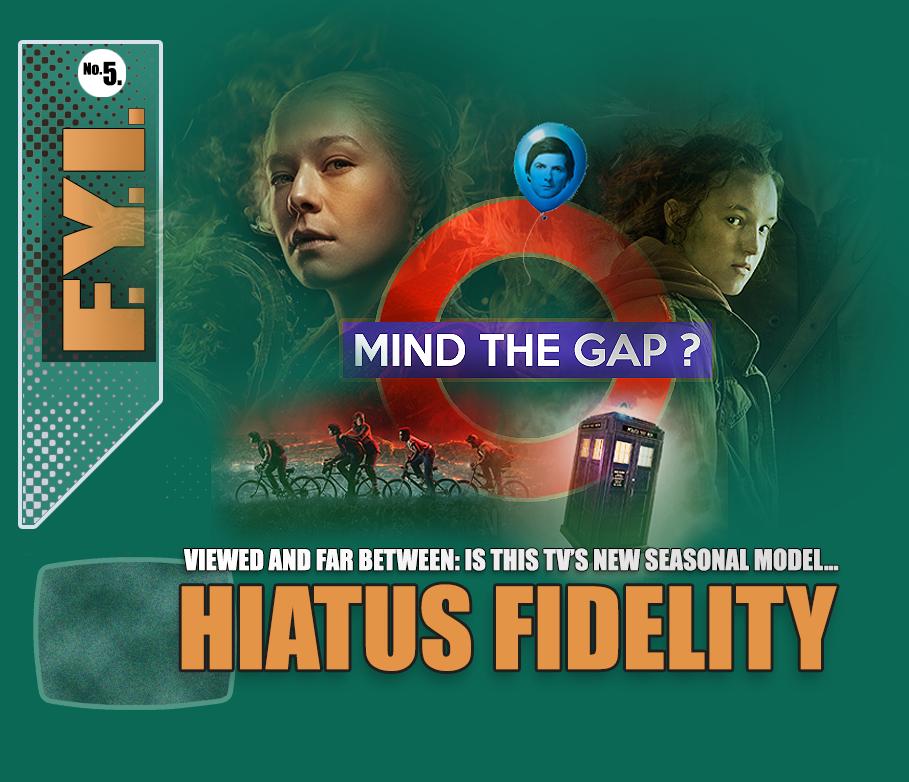
FYI: Shorter Seasons, Longer Waits – how streaming changed television forever…
TV ain’t what it used to be… or when. John Mosby notes how size, cost, output and delivery options have reshaped the entertainment landscape forever…
We’re living in a golden age of television drama. There might be some who disagree with that statement, but they’re wrong.
In the modern landscape there’s just about something for everyone. You may have to pay extra to get it, but it’s there. Yes, there’s still a ton of dross to wade through and still a tendency for new shows to need a strong start or face the axe in a competitive market. There’s also an imperative to brand-loyalty and minor variations on a theme (hence the proliferation of franchises such as NCIS , the Chicago… shows and the Law & Order legal universe). However, with entertainment no longer limited to a finite number of networks, the advent of streaming has seen a lot of money being put into big-budget, high-profile productions that would once only be the purview of big-screens outings.
 HBO was arguably the first out of the gate. Its break-the-bank, break-the-mold titles started with the likes of prison-set Oz running from 1997 to 2003, WWII epic Band of Brothers (2001), police drama The Wire (2002-2008), the funeral-home-set Six Feet Under (2001-2005) and Carnivàle (2003-2005) all distinctive, edgy dramas that would never have made it to air on the more risk-averse, FCC-regulated networks. Gangster-chic The Sopranos (1999-2007) and dust-drenched western Deadwood (2004-2006) followed and we’ve continued with the likes of sex-and-sandals in Rome (2005-2007),dragons and danger in the land of Westeros (both Game of Thrones (2011-2019) and current prequels House of the Dragon and A Knight of the Seven Kingdoms), the deep-dive digital threat of Westworld (2016-2022) and – of course – current apocalyptic game adaptation The Last of Us… all bringing in stellar numbers and plaudits.
 Elsewhere, AMC has given us various The Walking Dead series, Breaking Bad (2008-2013), Mad Men (2007-2015) and Better Call Saul (2015-2022). Netflix gave us classic including (but not limited to) Mindhunter (2017–2019), Outlander (2014-2026), The Lincoln Lawyer (2022-present) and, of course, Stranger Things (2016-2025). Amazon‘s treasure trove includes Bosch (2014-2021) which has produced two spin-offs with more to come), Tom Clancy’s Jack Ryan (2018-2023 and back with a tv film next month) and Reacher (2022-present).
Severance (one of Apple TV‘s hits) had a near three year gap between its first and second season, with COVID being a factor in the length of that break.
On Disney+, the first season of critically-acclaimed Andor ran between September and November 2022 but its second had to wait until April 2025 to debut. It was worth waiting for, but… it would have been even better if we hadn’t had to. The Handmaid’s Tale managed a yearly output of ten episodes for each of four seasons then had a gap of over two and a half years for its fifth run. Even by modern standards, Severance had a mighty gap between its first and second season – the S1 finale airing in 2022 and the second reaching the screen in 2025. Squid Game gave it a run for its money at nearly three years and Arcane had a similar gap (though, to be fair, animated fare legitimately takes much longer to produce).
That’s quite a collection – and that’s just scratching the surface.
Earlier examples in that list usually managed to produce a regular season pattern of around thirteen episodes every year-to- eighteen months or so. It was already a big difference to the networks that produced over twenty episodes every year. (Pragmatically, it helped cable outlets that the likes of Oz and Deadwood existed in confined locales, where sets could be built and maintained rather than needing new locations which helped both budget and filming logistics…)
However, it’s now far from rare for the streaming shows to have a gap, or a hiatus, of over two years. Arguably, it’s becoming the norm.
Of course, while one can argue that such delays increases anticipation for their return it can also lead to viewer fatigue and attrition. A show can be your favourite for part of its run, pulling in ratings and awards… but in that full-to-the-bandwidth-brim market there’s plenty of other titles to turn your head and replace it if you have to wait years for the original to continue. If a hiatus of mere weeks can cripple a fledgling network show – and it has -then actual years make a bigger crater, particularly if a chosen demographic ages out or simply moves on. Netflix‘s major hit The Umbrella Academy, had its viewership hit particularly hard after disappearing for two years after its third season. If an audience drops, all too often there too goes the show.
It’s hardly unique. I’ve found myself raving about some shows only to shrug on their return because I’ve forgotten where we left characters, what they were doing and why. Something new and shiny now has my attention. While it’s entirely possible to go back and watch older episodes (streaming, DVDs etc.), there’s often the feeling that it should be done for pleasure not for sheer necessity.
 Most recently Stranger Things returned for that final bow. The gap between Season Four and Five was over three years, reflected in the heights and faces of its cast and the fact that a binge-watch of the previous runs was an absolute necessity to bring yourself back up to speed. Did that affect the mixed reaction to the much-touted finale… despite massive budget and high-visibility, it may well have contributed to frustrations.
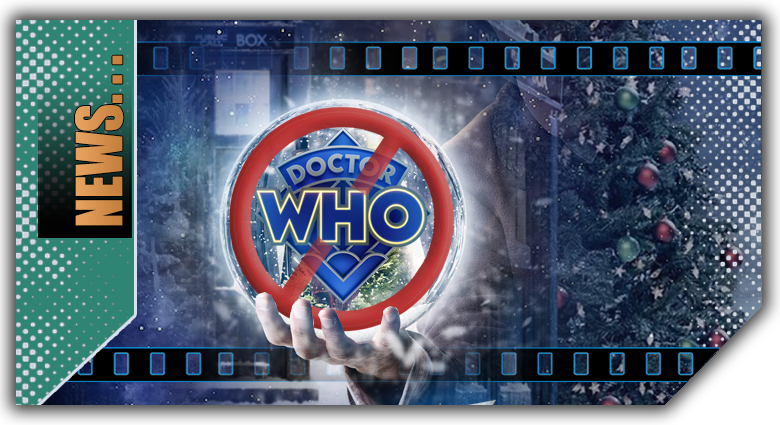
It’s not just US shows. British mainstay Doctor Who has struggled to produce regular output since its otherwise triumphant return in 2005 (after a decade off-air). At one point there were three Whoniverse shows – the main title, the adult-orientated Torchwood and the younger viewership for The Sarah Janes Adventures (with the beloved Elizabeth Sladen). Those were the pan-galactic gargled salad days and are long gone (the latest Who-adjacent outing was The War Between the Land and the Sea mini-series , but despite a UK broadcast late last year, Disney+ has failed to fulfil its promise to show it in the US in the ‘early part of 2026‘)… perhaps fall-out from the partnership that has now been dissolved. Some modern Doctor Who seasons had twelve episodes, some had ten, some had eight (spot the trend) and sometimes it was reduced to mere specials. There were also years when there wasn’t a single episode. Latest incarnation Ncuti Gatwa departed under less-than-ideal production circumstances in May 2025 and though there’ll be a Christmas ’26 special (possibly with Billie Piper heading the line-up), momentum seems slow from outside the process. During those two decades, various Who showrunners declared with Han Solo confidence that “…everything’s perfectly all right now. We’re fine. We’re all fine here now, thank you. How are you? ‘ and cited the maxim that says ‘absence makes the heart grow fonder’. Yet the reality is the same as US audiences… the longer the wait, the longer the potential erosion of viewers. You can parlay that into teasing a much-anticipated ‘event tv’ revival but if an audience doesn’t have some genuine belief that they’ll get regular and continued output, their attention will wander and put their unquestioning, habitual investment at risk. Tempus Fugit, indeed.
Compare that with the less-flashy, more down-to-Earth but just as critically-acclaimed UK spy-drama Slow Horses (based on the Slough House novels by Mick Herron) which has produced a season per year (filming two six-episode seasons back-to-back – with the sixth season due later this year and Season 7 already lensed). There are valid reasons many hi-tech, multi-locale shows take longer and contemporary shows are somewhat easier, but Slow Horses does prove quality doesn’t always take that much time and that forward-planning is key.
There’s an understandable pragmatism at work.

New shows are always risky, whether they are built around a notable trend or known intellectual property or not. Will a studio capture lightning in a bottle? Should they heavily invest or bide their time? Will the primary story still work with an extension? It’s relatively easy to see why there might be a financial splurge at first (particularly with marketing) but then a drop-off. Projects like Amazon Prime‘s 2023 launch Citadel – about a global spy-agency conspiracy and starring Richard Madden, Priyanka Chopra Jonas with Stanley Tucci and Lesley Manville – was announced with a swagger and promise of multiple shows in multiple countries and spin-offs. The reality? Decent ratings – but not stellar – and it’s been three years until the second season, which starts next month. However, few people are willing to play that long-game any more or throw more money unless there’s clearer proof of life and success in the premise. There’s been no shortage of titles that audiences might have presumed were a sure thing, but weren’t renewed because sacrifices had to be made and other shows were cheaper to make.
 Of course, lack of frequency is not due to real lack of intent. In an ideal world, the extended gaps between seasons are on no-one’s wish-list. For instance, 2020’s COVID outbreak and the actors and writers strikes in 2023 were mitigating factors that also hobbled schedules with plenty of shows cutting their episode numbers or curtailing the production entirely. These things happen. Technology moves at a pace and that helps speed things up in some of the departments. Even then VFX take time and other than using AI-produced content on a massive scale, it’s unlikely some of the top streaming shows that involve a lot of location work and post-production VFX will be able to improve their output by a significant margin in the near future. Networks have found a model that works for them – often with those standing sets and a conveyor belt of production helping with schedules and built-in gap-weeks and shorter hiatus times. But even there, it is common for episode counts to drop to eighteen or less and for a tv-year to be split into titles that only run half that time. (Next ‘season’, even big network hits like CBS‘s Matlock will be mid-season replacements not starting until early ’27).
But pre- and post- pandemic, if a show is successful, everyone concerned will pragmatically want to make more of it as soon as possible – the production will make money and the audience will be happy (as long as quality is maintained). An episode of House of the Dragon or Doctor Who every week… well, yes, of course that would be just spiffy, but that’s just not possible given the risk/return of costs, production values and turnaround time in ‘post’. But could they be just a little more frequent than they are? In some cases, perhaps.
Shows need investment to get to the screen, never mind stay there. There’s an attraction to creating ‘home-grown’ product, but even the likes of Netflix and Amazon often have to rely on buying product rather than originating it wholesale. With such a plethora of platforms (even with amalgamated bundling there’s ever more appearing), ‘success’ is sometimes hard to parse if there’s a general decline in an audience or if it’s merely the result of a greater spread of audience-share. DVR (ie: letting your smart-device access a show at a time to suit you) gives audiences a longer leash and there’s plenty of people who come to a show late and binge-watch. (I fully admit that I was a late-comer to Game of Thrones and watched five seasons in one summer ready for its final run). Programme-makers need to look at their budgets and often decide that a season of a show every eighteen months is as good as they can risk and shows have to continually prove themselves thereafter.
The wait can be excruciating, but shorter seasons in and of themselves , may be no bad thing. Budgets for each episode can be increased and plotting in mini-series or less than double-digit runs tends to be far tighter with less ‘filler’ episodes than their network cousins. It’s a lot easier to tempt people into a six-to-ten week investment of their time (maybe less if you release more than one episode a week) than it is for a 18-22 episode run. The UK audiences have known that for decades.
Even with the now splintered market and the days of massive ratings being a thing of the past (or because of that), all platforms and content-creators are having to reassess their options. Networks will likely continue their practises for the foreseeable, but they know they are no longer untouchable and are adjusting their output accordingly (often sharing content with streaming services they own or with which they partner). Even with fluctuating price increases, plenty of people have still been tempted to ‘cut the cord’ entirely.
In an era where the audience demands not only content but convenience to watch when and where they want, the gap between seasons is frustrating and consequential, but it’s a symptom of that sea-change. Akin to watching movies at the cinema, where sequels are a pay-off for success rather than a necessity to finish a story… or books where characters may continue through various volumes but you don’t have to read them all, binge-watching self-contained seasons may well be the blueprint of the future. Streaming may be a literal ‘serial-killer’ in favour of standalone series that simply don’t promise regular new material beyond that run.
There was controversy that the now avoided Netflix–Warner Bros. Discovery merger might kill cinemas and even with the Paramount-Warner Bros. Discovery deal now taking its place, one wonders if both cinema and tv as we know it are living on borrowed time. Who and what will adapt first? Audience or providers? If we still have VOD (video-on-demand), then who makes those demands and what will those demands be?
All we know for sure is, for better or worse, it won’t be your parents’ tv any longer.
John Mosby