




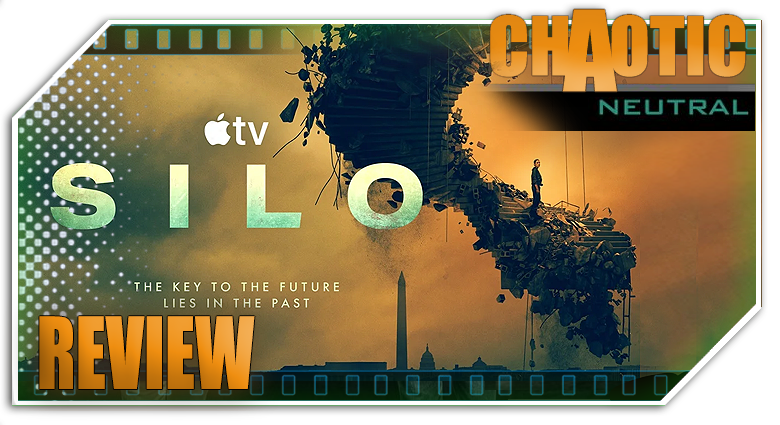
SILO S3 OVERVIEW: Apple’s apocalyptic adaptation begins to majestically spiral…
*Spoilers. Obviously.*
Television shows with mysteries at their centre are often catnip tv, but ultimately face a problem. In a medium where renewal and cancellation are a russian roulette of possible outcomes (and where such outcomes may be governed by more than just a strong creative idea or even the ratings), how do you produce a satisfying pay-off? Do you rush a possible ending or do you risk leaving everything on a cliffhanger? On the flipside, dare you drag on things too long that your original idea no longer works or people lose interest?
As we noted in a recent FYI, apocalyptic tales are also now plentiful. The Walking Dead is still staggering, Paradise is still the apple of some eyes. Fallout has an aggressive form of future whimsy. Like a few of those, SILO has the advantage of being derived from established fiction, in this case a set of books by Hugh Howey and so at least the framework and a set of answers are there in the mix, ready to be acknowledged or tweaked.
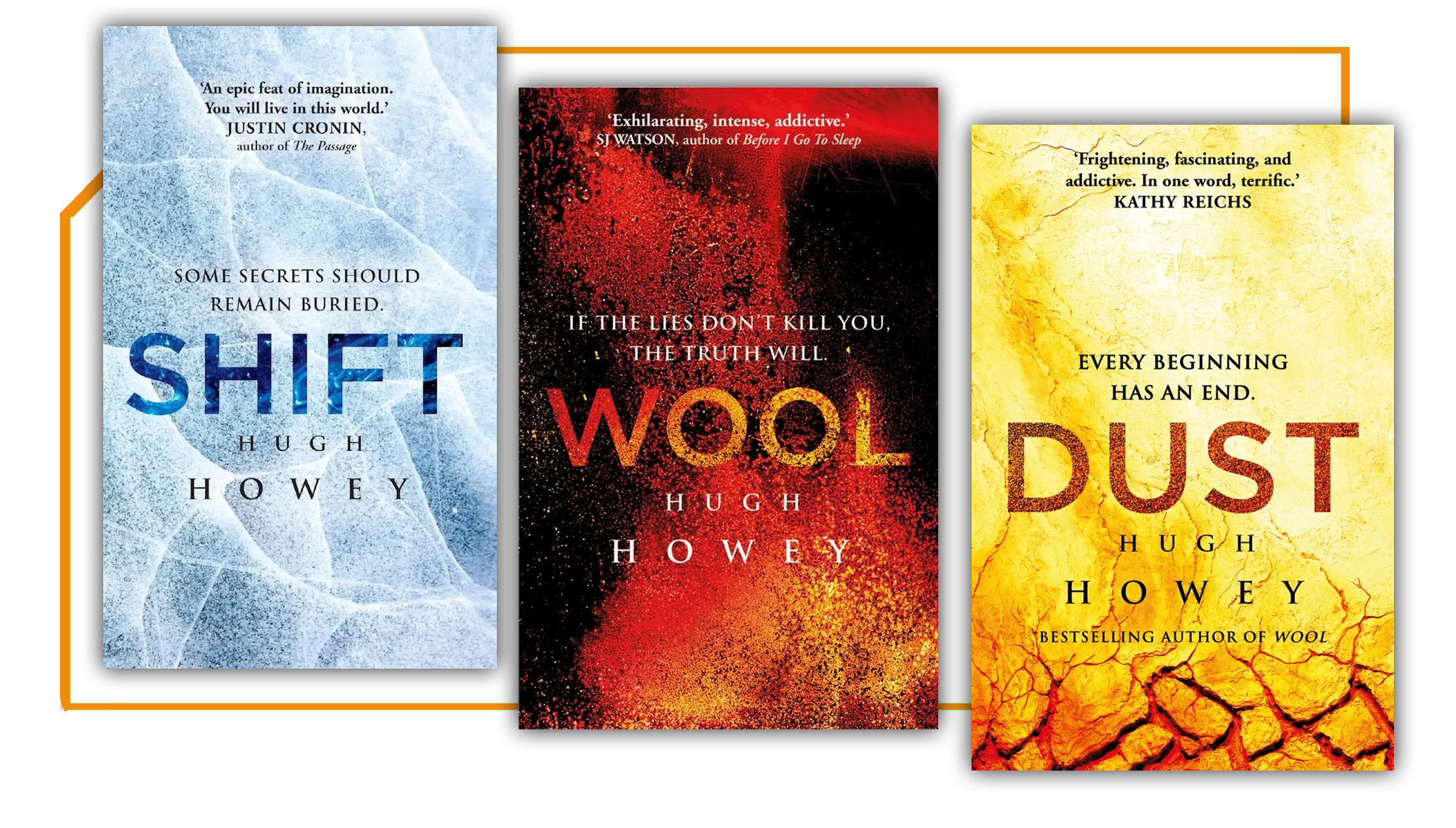 For those who don’t know, Howey’s collection of novellas and books (SHIFT, WOOL and DUST) told the story of an entire society that lived in a silo that was over a hundred levels deep, governed by the words of a strict rulebook from centuries before. The inhabitants lived in palatable but pragmatic, humble conditions with strict jobs and life restrictions. They were unable to reproduce without permission, unable to venture outside unless it was by extreme wish or punishment. (Anyone sent out to ‘clean’ seemed to die a swift but painful death from the environment out there and no-one knew what lay beyond the immediate crater). It was unwise to question the small but elite leadership and no-one seemed to know the origins of the silo beyond a favoured few… and even they knew the danger of questioning things themselves. After the wife of the Silo’s sheriff begins to question the rules she ‘decides’ to go outside, soon followed by the sheriff himself. A woman named Juliette steps into the law-enforcement position, moving up from her role in engineering. But it turns out that Juliette Nicholls (Rebecca Ferguson) is far from satisfied with the few answers her cabal of superiors choose (or are able) to share… and so begins the seeds of resistance and extreme actions on both sides and the revelation of what lurks beyond her own silo. Howey’s original books also began to show the earliest seeds of the timeline – modern day Washington DC and the reasons the silos came into being.
Rebecca Ferguson – as Juliette – is a charismatic and versatile actor who anchors the show well. Her past credits include the Mission Impossible franchise, Dune, The Magic Faraway Tree, Life, The White Queen, The Shining sequel Doctor Sleep and even if iffy material like the broad-stroked sf hokum Mercy, she’s the best thing in it. Through three seasons of SILO she’s humanised Juliette without ever letting the character shed her own foibles and faults. Juliette is someone who doesn’t want power or influence, who had found her own niche in the silo and was content – if not entirely happy – to live out her life as a small but needed cog in the process. It’s circumstance that propels her upwards and tenacity that keeps her going, indignation that won’t let her let sleeping dogs lie and perhaps sheer stubbornness that keeps her alive.
For a majority of the early run she’s pitted against Bernard Holland, the highest-ranking member of the silo who is not aware of many of the silo’s secrets, but closely (and in his opinion, pragmatically) guards the ones he’s done. He’d gladly get rid of Juliette in a heartbeat, but is aware that rebellious people can be more dangerous as martyrs to the cause. Tim Robbins plays Bernard as incredibly dangerous because of his power and pragmatism and he initially makes a great figurehead for all that is wrong in the institution.
Ferguson may anchor the series and Robbins is predictably good, but the mainstay ensemble cast is also brilliant. Co-stars, also pivotal to proceedings in their various ways, include Common, Harriet Walter, Iain Glen, Avi Nash, Shane McRae, Billy Postlethwaite, Alexandria Riley, Chinaza Uche… not to mention the likes of David Oyelowo and Rashida Jones who appear in the early episodes and Colin Hanks, Laura Innes, Reed Birney and Matt Craven who come in later. The only thing outshining them all is the main set which may be enhanced with visual effects but remains an impressive feat of physical production design in and of itself.
The main pillar of the books and the ideas therein remain for the series, created and run by Graham Yost (also an executive on an entirely different type of gem, Slow Horses) though it’s interesting and fascinating to see the way that the show adapts the core constructs while weaving some new characters into the mix and subtly adjusting the mythology.

I’ll be fully honest in saying I haven’t read the books ( I definitely should) but find the series fascinating and it’s a rare thing where fans of the book and newcomers mostly find the result to both their tastes. SILO is also the rare kind of show that demands you pay attention and then slowly rewards you for that loyalty, rather than spoon-feeding for an ADHD audience. Though it doesn’t suffer from the unfeasibly long hiatus that some major titles have endured (though it was around eighteen months between previous runs), it is spinning a number of post-apocalyptic plates with a large ensemble of characters that need you to keep up, stop and assess where you left things.
The third season added yet another layer when it had something of a time-jump for its main narrative. Season Two had largely been about Juliette realising there were other silos and surviving a visit to the nearest one… so wait…how did Juliette – whom we last saw re-entering her own silo but possibly being burned to death – survive and become mayor? Not only that but Season Three also started expanding on the second season epilogue that flashed back to events three hundred years earlier (effectively, our present). Though ultimately a hugely important part of the saga (and perhaps no surprise to those who have read the novels), it initially felt like watching Snowpiercer and suddenly switching to The West Wing – both excellent shows but hardly the most obvious of bedfellows.
Season Three would build on that and even if the split-focus between the different time-periods started off with a worrying LOST-like vibe, it quickly settled in nicely. Tensions grew as Juliette regained the memories that had been apparently lost during her re-entry into the silo and we learned that the characters we saw in ‘modern’ Washington DC – lobbyist Daniel Keene (Ashley Zukerman) and reporter Helen Drew (Jessica Henwick) were hugely important to the origin of the silos… and possibly beyond. Daniel’s sister and army pilot Charlotte (Jessica Brown Findlay) was also introduced as were various politicians and a billionaire whose influence and reach certainly reminds us of a real-life counterpart.
Though there have been times over the three seasons where some aspects seem to have moved at a snail’s pace, great but slowly shifting the pieces, the moments of tension have been earned and the penultimate episode of this current run surely felt like a season finale. The inhabitants of the silo faced major and parallel revelations with events in the past. Shortly before being forced out to his death, Tim Robbins’ Bernard surmised that the computer entity overseeing the silo was actually some distant human (because it got pissed at him rather than being wholly, coldly rational). It didn’t save Bernard but it might have given Juliette some ammunition for her cause and certainly redeemed Robbins’ character. In the past Daniel and Helen somewhat reluctantly attended the celebratory opening of the silo-complex in Georgia but were invited to see different silos. Daniel subsequently worked out that the texts to his sister Charlotte were being answered not by her but by something that felt more robotic and disconnected in tone. And that was before a nuclear bomb went off on the horizon.
Phew.

We headed into the finale (‘Troy‘) not knowing what was to follow. Would the final episode of Season Three be able to top that spectacular denouement, would it provide more answers or more questions? The finale was technically less explosive in the literal sense, less eye-catching in that regard but it solidified much of the connective tissue between the time periods, aligned the needs of characters and essentially set the scene for what Season Four must now bring. It initially wrong-footed the viewer moving the action to the unseen Silo 1 and showing a version of Ashley Zukerman that didn’t seem like Daniel (a clearly memory-wiped Daniel now utterly ruthless and referred to as ‘Troy’). We saw some of the past characters, apparently using cryogenics to extend their lives and overseeing the other silos’ fates with cold eyes. We learned how and why some past/future events had happened as they did while still leaving plenty to explain. Yes, the finale was a scene-setter and it did it well. Episodes 9 and 10, taken together, are nothing short of extraordinary, changing allegiances and bolstering resolve.
Will SILO be able to stick the landing with its fourth and final season? It’s already been filmed (like Slow Horses, two seasons were filmed back-to-back) and so much work done on it that a frankly magnificent trailer was ready after the Season Three finale aired. The year wait for the final run (confirmed on screen for 9th July 2027 – a year after the Season Three debut) will be a hard one. Some classic shows have stumbled in the home strait, but everything that’s come so far and the intensity of that trailer suggest that SILO could well end up being a classic show.
Literally, a deep and grounded fantastical tale for the ages… SILO is one of the most ambitious shows in a long time and may solidify that status even further by this time next year.
If only one could be put in stasis now to more quickly reach that conclusion… but today is not that day.
10/10
SILO is available on Apple tv…