


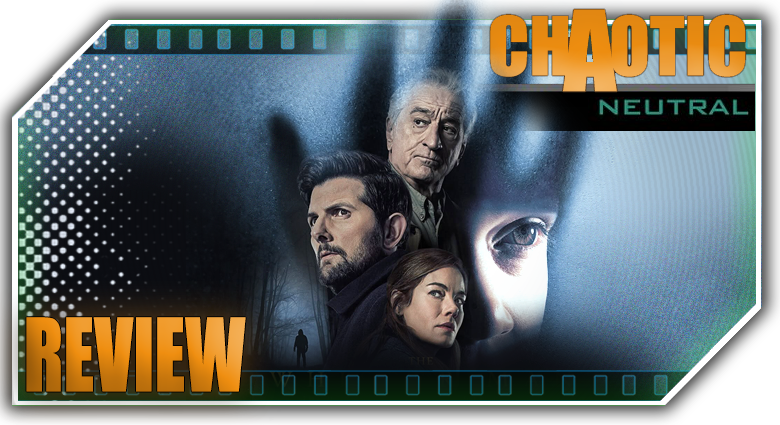
Streamlined ‘THE WHISPER MAN’ won’t be Silenced…
Tom Kennedy is a novelist navigating somewhat lonely territory. He’s long been estranged from his father for decades and with the recent loss of his wife, Tom is handling the raising of his son Jake as well as he can.
Returning to the neighbourhood where he and his late wife once lived years before, Tom is hoping for a new start for both himself and Jake but the town of Garretton, New Jersey isn’t as much a sanctuary as he’d hoped. Decades ago, a killer became infamous for snatching neighbourhood children. Named ‘The Whisper Man’ by the tabloids, it was said that each of the victims had heard a strange quiet voice enticing them away in the days before they vanished.
The killer, Frank Carter is long behind bars, ironically put away by the efforts of Pete Willis, Tom’s father, and it would seem the legends have been lost to time.
But now kids are disappearing again and Jake, still having troubles coping with his new life, is convinced there’s someone lurking outside. He sees a figure scurrying into the night, blue-fingered hands creep through the letter-box…
When Jake vanishes, Tom pleads with his father to assist the local police, but time is running out to find out where the whispers are coming from and why…
If you’re lonely, sad and blue…the Whisper Man will come for you…
Adapting best-selling novels is always a tricky thing. Films and books are two quite different mediums and a wholesale transplant is unlikely to have exactly the same impact – what works in one isn’t guaranteed to work in another. An investment in reading a book should be measured in days while a film – even in the age of longer running times – is unlikely to push too far past the two hour mark.
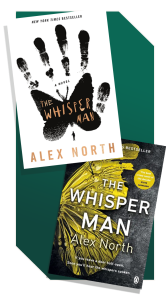
Netflix‘s latest release – based on the best-selling The Whisper Man by Alex North – is a prime example of the difficulties of deciding what is excluded, what is included and the power of what remains. The necessity of stripping down some of the nuances, layers and explanations in hundreds of pages of source material to produce a story that can be consumed via a in-one-sitting venture results here in a perfectly engaging thriller with some serious star-power, but one that speeds along built on good bones rather than on the greater sinews and muscles that were flexed on the page.
 That being said, the Netflix outing is still one of the better screen stalkings than we’ve seen in a while – at best when it moves beyond early exposition and becomes propelled by a strong cast that relishes playing with the more primal, connective tissue that does remain. The screenplay (by Ben Jacoby and Chase Palmer) ironically keeps many of the emotional beats of the novel, the kind that far too many adaptations eschew in favour of set-pieces, but the trade-off here – beyond uneven pacing – is the loss of some deeper original plot elements and character actions that now leave gaps that really needed exploring. To the casual viewer, some intuitive deductions and events now have the air of convenient luck.
James Ashcroft – who helmed The Rule of Jenny Pen and Coming Home in the Dark– has potentially just as disturbing a subject-matter to explore here (child-abuse, murder etc), yet plays it as more traditional fare and the result is likely a deliberate, confident calling-card to more mainstream if conventional Hollywood work. Cinematographer Peter Deming (Mulholland Drive, Spider-Noir) gives us a subdued palette that could place many of the events in any era. Some early reviews of the Netflix adaptation have described it as a throwback thriller rather than the pacy procedurals of the modern era. There’s some truth to the pros-and-cons of that, but its power is not in see-this? pieces or the speed of the cat-and-mouse investigation, so much as in the story of familial tensions and generational fractures.
The film (produced by AGBO, the company founded by the Russo Brothers – the powerhouse behind Marvel‘s Avengers movies) knows that some of the essential work is done with casting and though entirely different and far more intimate than the cosmic saga, it is a case of – again – a collected ensemble all bringing their significant weight.
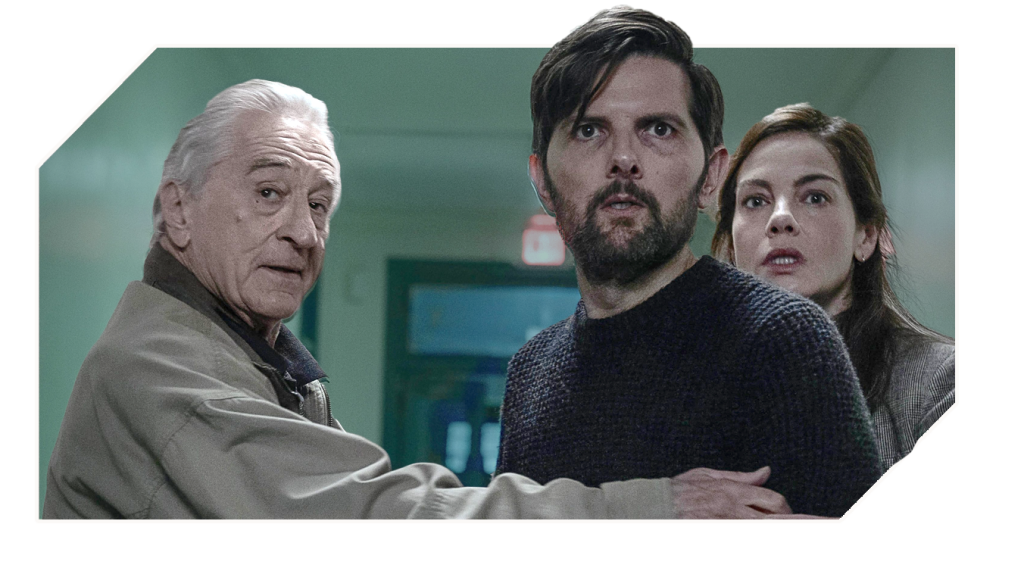 Though preternaturally subdued throughout, De Niro gets the best role he’s had in a while even if not the biggest. A legitimate cinematic titan, he’s not been consistent in recent offerings but he’s an actor of that rare calibre, capable of going ‘large’ or ‘small’ as the role demands and letting his now-Rushmore’d face do the talking… without lengthy monologues if necessary. Here, he’s Pete Willis, an elderly man who has a long gaze and troubled brow, but who has come to quiet terms with his regretful failings as a father, though some of his professional shortcomings ironically way heavier. Wisely, we aren’t given all the details of why his personal life fell apart, but it’s not hard to see how and where the cracks took their toll. Yes, he once put away a notorious serial killer but he’s also all too aware of the cost that came with that pyrrhic victory and the less-than-neat threads left dangling when the official part of the investigation closed.
Severance’s Adam Scott plays Tom Kennedy as the kind of imperfect son and father with whom we can sympathise. As the ‘middle’ generation, Kennedy is a man doing his best after the loss of his wife and the everyday ebb and flow of raising a child who is processing that loss differently. Again, it isn’t flashy, but Scott’s performance shows us the moments of unconditional love Tom has for Jake mixed with exasperation as he starts to make some of the same mistakes as Pete did before him. But the minute he perfectly shuts down excused bullying at the new school or flashes righteous, desperate anger at those who appear not to devoting their full time to saving his missing son, he seems strong, motivated and believably human.
Michelle Monagahan is Amanda Beck, the detective tasked with tracking down the person responsible for the new raft of killings. Though Monaghan gives her a steely resilience, the film doesn’t really develop and flesh out her character as much as it could and she’s carried along by others’ actions, providing a procedural guard-rail rather than pivots.
Given the scenes he has are good, it’s a pity we don’t see more of Acston Luca Porto as Jake. Jake’s abduction happens later in the book, but much earlier in the film. We still get moments of his captivity and some nuances as to how he’s surviving the ordeal, but the depicted resilience doesn’t quite have that emotional wallop of, say, Black Phone‘s conceit because of that brevity.
The Whisper Man may share a quiet title element and story-point of power-games with a convicted killer (including another Oscar-nominee, no less), but the original premise never leaned into the seminal Silence of the Lambs territory that some film reviewers have raised. Its strengths lie elsewhere. Again, it’s a shame that the film shows us the quality of the core concept, the abilities of its cast and the talents behind the camera but ultimately results in a film that is good but should have been as great as a sum of those factors.
My recommendation is to simply ‘Netflix and chill‘ and thoroughly enjoy The Whisper Man on screen for the decent but short-hand telling of the tale and the talent it puts on show, fairly noting the elements it both embraces and avoids to varying effect. Writer Alex North himself has acknowledged satisfaction with the adaptation’s adherence to the original themes, despite the necessary streamlining. The early reviews ranged in opinion from ‘brilliant’ to ‘decent’ and your appreciation may depend on your expectations and your exposure to the novel.
Watch and enjoy the film this weekend, murmur and muse on its twists and turns and then compare opinions around the watercooler on Monday… but then go read the best-selling book and see why it originally made such a noise and why that may well linger longer.
8/10
You can watch The Whisper Man on Netflix from 28th August.
In the need for transparency, the reviewer acknowledges a familial connection to Alex North.