





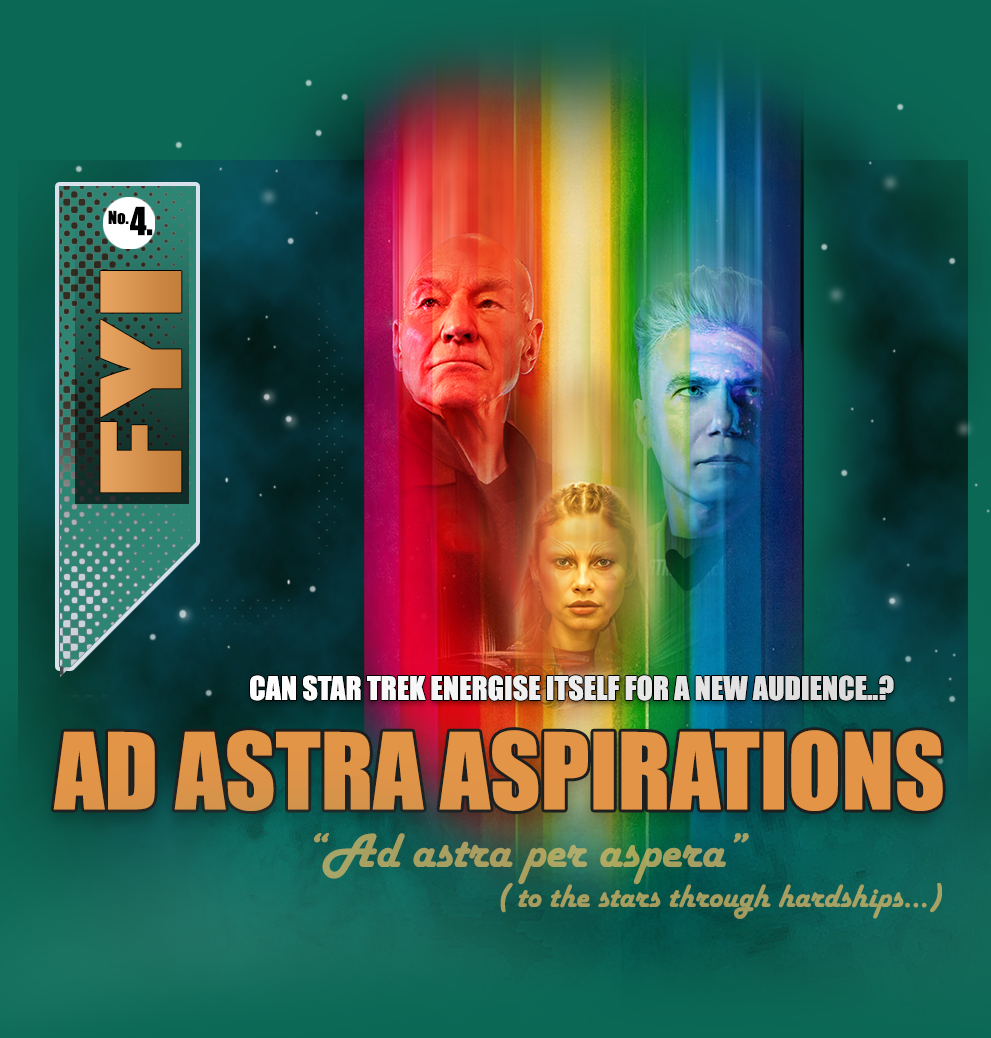
FYI: It’s part of our cultural DNA, but can STAR TREK still go boldly?
As Star Trek hits 60, it is once again struggling to find its audience. So, asks John Mosby, how did we get here and exactly where does the most famous split-infinitive go next?
It’s not an exaggeration to say that Star Trek is more than a mere television franchise. In an industry known for quick results rather than longevity, it made a humble yet historically significant mark on the schedules of the 1960s. Its ratings were not outstanding, but despite there only being 80 episodes over three seasons (1966-1969), there’s no denying the massive impact that echoed down the decades thereafter.
So, firstly a future-history lesson of quite epic proportions…
Beyond its influence on many of the tv shows that came after The Original Series, its view of a mostly positive future where mankind had learned to work together and had reached for the stars was an important one in an era full of Earthly conflicts. People who work at the likes of NASA have since cited the show as the reason they got into real-world science and Martin Luther king famously told Nichelle Nichols that her role as Uhura, a black woman on the bridge of a starship, was of societal importance beyond the confines of the television set.
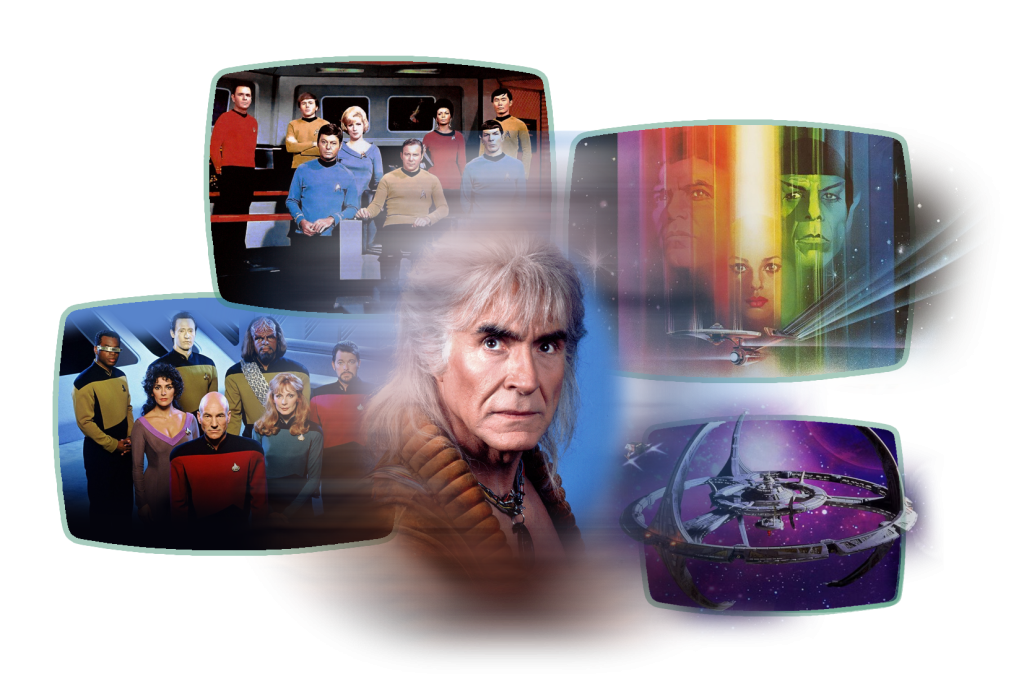 An animated series ran for two seasons between 1973 and 1974 and then a proposed live-action sequel series was mooted for the early 1980s but ultimately became the start of the feature film arm of the franchise. Star Trek: The Motion Picture opened in 1979 but swapped the fun flourishes of the show for a more sterile 2001-theme. 1982’s The Wrath of Khan went back to basics as a sequel to one of TNG‘s episodes Space Seed and it remains one of the most iconic films of the Trek franchise. Two years later, the crew would search for their fallen comrade in The Search for Spock and 1986 saw the crew time-travel to rescue whales in The Voyage Home. Then, in 1987, The Next Generation – set around 100 years later and with a totally new cast of characters – strode purposely out of its parental shadow and on to tv and ran for 176 episodes / seven seasons between 1987 and 1994 making the new Enterprise captain (Patrick Stewart’s Jean-Lic Picard) and the ship’s crew equal household names. 1989 and 1991 brought the last two feature films with the original tv crew (The Final Frontier and The Undiscovered Country, respectively).
TV series Deep Space Nine (1993-1999) swapped a roving starship for a static, but strategic space-station and exchanged regular strange alien encounters for a more nuanced, political tone (arguably well ahead of its time). Voyager (1995-2001) stranded a disparate crew of Star Fleet officers and rebels on the far-side of the galaxy, having to work together to get home and then Enterprise went back to the earliest days of cosmic space-travel, charting humanity’s earliest voyages into the cosmic unknown and the start of a fledgling Federation. (Running from 2001 to 2005, it ended on something of a sour note with a finale that focused more on TNG characters experiencing an historical story about them on the Holodeck – with some even suggesting the whole show had been such a recreation). The Next Generation crew featured in four feature films (1994’s Generations – which united Picard and Kirk, with the latter apparently perishing at the end, 1996’s First Contact – another time-travelling story featuring the Borg, 1998’s Insurrection and 2002’s Nemesis). For the next decade, televisual Trek dried up with the movies assuming the most bankability. It wasn’t until the rise of better bandwidth and streaming than Trek would start to make a real come-back.
 The first season of Discovery – launched on the CBS All Access platform (later rebranded as Paramount+) and was set aboard a super-prototype Federation vessel of the same name, placed in the timeline around a decade before the Enterprise and TOS would fly. For the first time the show didn’t pivot around a Captain, but rather a rebellious, troubled officer named Michael Burnham (The Walking Dead‘s Sonequa Martin-Green). Her actions were problematic, nearly starting an all-out Klingon/Federation war. It launched with much anticipation but its tone divided fans – the first-season Klingons were completely redesigned and it seemed to struggle deciding if it wanted to be darker or derivative . Tweaks were ongoing, but each season seemed to make fundamental chnages. Each week Burnham made reckless decisions but slowly rose through the ranks, though one could play a drinking game with the amount of times she would get teary-eyed each episode. Anson Mount’s Christopher Pike and Ethan Peck’s Spock were introduced as guest-stars and proved popular, but the Discovery’s temporal problems saw it propelled forward into the 32nd Century in what often felt like an attempt to rework the concept entirely.
Peck and Mount’s popularity led to a quick commission of Strange New Worlds, detailing the early days of the Enterprise before its legendary five year mission under James T. Kirk. Taking some of its cues from the original TOS pilot / The Menagerie, we see Pike learning of his possible destiny and yet choosing to keep boldly going with his crew. While not to everyone’s tastes, it did capture a nostalgic flavour and sense of both drama and whimsy that made it the show with the largest demographic in some time. It’s fourth season will air this spring and a six-episode Season 5 (scheduled for next year) has already completed filming and will bring the timeline up to the point where Kirk formally assumes command.
Elsewhere Jean-Luc Picard returned for three series of the eponymous Picard and while it’s always be pleasure to watch Patrick Stewart go through his paces, all three seasons shifted in focus. The second was an awkward time-travel concept, having Picard and crew land in the opening years of the 21st century and deliberately echoing aspects of the feature The Voyage home. It played fast and loose with cause and effect. The final season united the surviving members of the original crew and mined nostalgia for all it was worth. But in the closing chapters it shifted from shape-shifting aliens first introduced in Deep Space Nine and whose promised infiltration of the Federation had never been truly realised and gave us a Borg denouement. It was fine as a limited series and send-off but it felt like extended closure and even the tantilising idea of a spin-off focusing on a ragtag crew (Legacy) that energised the fnabase failed to materialise from Paramount.
There was also a return to animation with the subversive and addictive Lower Decks (fifty episodes – not including an unlikely crossover with Strange New Worlds) over five seasons between 2020 and 2024) and the often overlooked Prodigy (forty episodes over two seasons between 2021 and 2024).
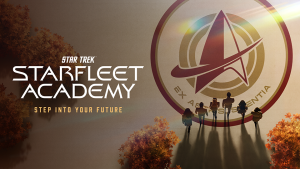 The most recent incarnation, Star Fleet Academy, was set in the far-future, essentially continuing on from Discovery and focusing on the Federation and Star Fleet’s attempts to rebuild after a cosmic calamity (detailed in Discovery). It follows a group of disparate cadets, each bringing their own problems and attitudes into life-learning lessons. I described it in my early review as Hogwarts in Space.
I hate the word ‘woke’ in its current connotation – it’s become an ambiguous, fluid word that’s too often casually thrown around with a self-congratulatory, condemning sneer, but usually only directed at whatever a person dislikes when they feel a different demographic is actively being catered for. Some felt Starfleet Academy embodied the word but complaining that Trek has ‘suddenly gone woke…’ seems to suggest that no-one remembers the morality plays The Original Series undertook and the boundaries it famously pushed. That being said ‘gay Klingon’ does feel like an orchestrated stretch, designed for both bullet-point media and bandwidth coverage. (It’s not that it couldn’t happen – after all one of the most feared warriors through the centuries – Spartans, Greeks etc. likely had same-sex relationships – but it does feel somewhat shoehorned).
Despite struggling on with Star Trek: Discovery until it glided/ hobbled into space-port, the latest incarnation Starfleet Academy lost me after only four episodes, a first for modern Trek. I bear it no resentment, it simply wasn’t a show aimed at me any more. And Starfleet Academy‘s faultline was not that it catered for a younger generation, with a concentration on the kind of angst and relationship problems that only beautiful people can understand. Yes, that might well have left the older audience adrift but Trek can cover a lot of cosmic ground. It’s not a ‘right’ that one has to find every iteration compelling and it’s not as if there isn’t plenty else to watch.
Okay – so, that’s the comprehensive days of future past and we didn’t even mention the J J Abrams ‘Kelvin Timeline’ with the feature-film reboot – popular with some and financially successful but continuity-adjacent.
Now…where should the show Trek next?
Just looking at that uniquely long list delivers two clear observations. Firstly, with this many different variations on a theme and well over 1000 episodes of programming, Trek in itself is still an overall success and currently still on air (and with a healthy back-ctalogue). If it wasn’t there wouldn’t be half the number of shows or films – after all, studios might like to reinvent and reboot but if they think they are hitting a deceased equine it ruthlessly moves on and doesn’t give something so many numerous chances. Trek‘s longevity isn’t perfect or without subjective (and quite objective) road-bumps and it’s always been buffeted by the fickle winds of both show-runners and viewers alike… but it’s still a multi-generational institution and a money-maker. So, worries of a complete and utter eternal demise are unlikely. There will be a new variation on the theme – sooner or later.
But the rather obvious observation is that there’s no real answer… or at least not one clear one. Every viewer’s opinion, likes and dislikes are likely to vary and so producing the perfect show is nigh impossible and no sane showrunner will tell you otherwise. There’s also an alchemy with elements of luck as well as skill to producing a hit – or, importantly, a hit with the audience you want (a show can get cancelled not for its ratings but for not being the target audience the network/streamer and its advertisers require). You can get excellent actors, good writers, a good budget and it still might not work. The best to hope for is that a show has enough of the right people liking it and watching it on a regular basis for production to continue. Almost everything else – on a practical, pragmatic basis – is of secondary importance. (Plaudits and Emmys are nice, but they don’t pay the bills)
As another long-running sf show, Doctor Who, (over 890 episodes and counting) has found, the flipside to being a legacy show is the problem with simultaneously honouring the core of your concept while also needing to reinvent yourself for a new audience. One could write an essay on that show’s fortunes alone, but its rarely been possible to blend nostalgia and new ideas without some feeling their decades of ‘loyalty’ has been overlooked in favour of newer blood and recent trends.
But throwing everything at a show isn’t the answer. On paper, the idea of mixing a young-adult-skewing Starfleet Academy with a plethora of easter eggs and mythological references from decades of Trek might have seemed…. well, the best of both worlds, but without a solid core and throughline it simply doesn’t work – it just dilutes: everyone getting something but not enough.
The ideal situation is not to have one show and hope that it can please all. The secret, if there is one, is to have several different Treks on at once with a franchise-intact mythology but an arms-length relationship. Take for example Marvel‘s blueprint for its shows. Not all of them have delighted audiences, but they exist alongside each other even when quite different in approach. (Yes, technically… WandaVision, The Falcon and the Winter Soldier and Wonder Man share some common ground but are actively and deliberately designed to have different appeals). Equally, on the Star Wars front, Andor is a different beast than, say, Ahsoka.
Both the ‘Legacy‘ idea post-Picard and the strong idea of a First Voyages chronicling ‘missing episodes’ of the Kirk command era have a dynamic appeal with some built in traction from the fanbase and should certainly be options if Paramount wants to move forward.
Star Trek requires a healthy VFX budget but shows can be creative with that – perhaps going the DS9 route of having more standing sets rather new alien landscapes each week. Some prefer anthology, self-contained episodes with a throughline, some prefer a more overt serial. There are plenty of variations. Will all work? Well, no-one puts millions into a production if they believe it will fail, but even in these budget-tightening times Paramount has probably made enough money off Trek to keep investing. It may simply have to take a minute and decide which risks it wants to take and not put a date on broadcast until everything is aligned (rather than have a pre-determined date and the pressure to get there).
There have been calls for the franchise to take a ‘rest’ before throwing itself back into the cosmos. Even in what can be a toxic-environment where some actively seem to celebrate the downfall of a once-beloved show, nobody truly likes the idea of a franchise disappearing, especially when an ever-competitive market often moves the needle from ‘hiatus‘ to default cancellation. However, the recent images of the Strange New Worlds and Starfleet Academy sets being taken down (likely negating rumours of anything immediate with those Legacy/First Voyages concepts feel like an unfortunate visual at a point where Trek should be riding high.
Regardless of whether I like the results or not, I, for one, hope the series – in one form or another – continues. No, the money required isn’t coming from my pocket (but streaming subscriptions are hardly decreasing, so perhaps it is) but I have little doubt that it will find its audience(s) again because Trek‘s core concepts of cooperation and exploration remain attractive in a world where reality on television is several levels of depressing.
We do know that Dungeons & Dragons: Honor Among Thieves screenwriters Jonathan Goldstein and John Francis Daley (aka Bones‘ Sweets) are developing a treatment for the next feature-film installment, though there are no real details beyond the rumour it will be a wholesale reset.
However, tv-wise, in an industry that’s becoming more fractured with ratings and the demographic’d viewership that reflect that reality, the truth may be that the day of universal viewing habits and stellar ratings are a thing of the past and that studios and shows… and audiences… will have to shift their priorities and expectations, settling for more niche markets. The benchmark has moved.
In some ways, the current era is forcing them to boldly go where they haven’t gone before and reach an Undiscovered Country. It’s a literal new frontier where the needs of the many and the needs of the few may have to be reevaluated.
And if that paragraph doesn’t convey the way that Star Trek is part of our cultural DNA, well, I have a lightsaber to sell you.
John Mosby